
The story
The Story of Carcassonne
Dame Carcas and the Bells That Named the City
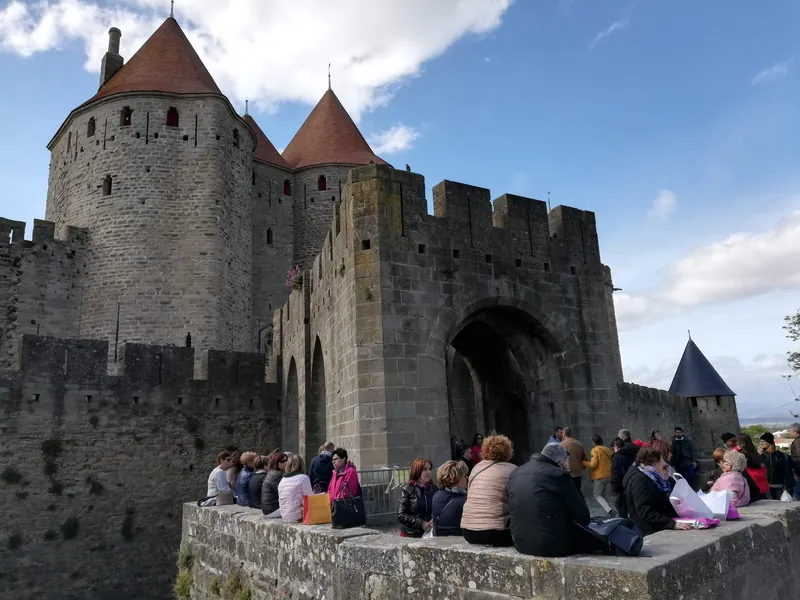
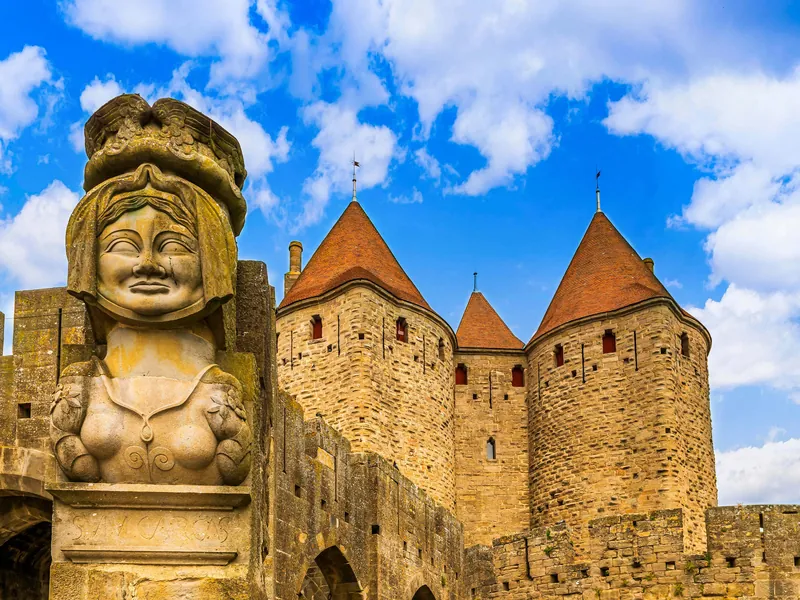
The best-known legend explains the city's very name. During a long siege — tradition places it under Charlemagne — Carcassonne was near starvation. A woman named Dame Carcas took command, propped straw dummies on the walls to fake a full garrison, and, with the last of the grain, fattened the last pig and threw it over the ramparts. The besiegers saw food being thrown away, assumed the city could hold out forever, and left. As they went, the bells rang and a herald cried "Carcas sonne!" — "Carcas rings." A carved bust of Dame Carcas still greets you at the Narbonne Gate.
From Roman Hilltop to Visigothic Stronghold
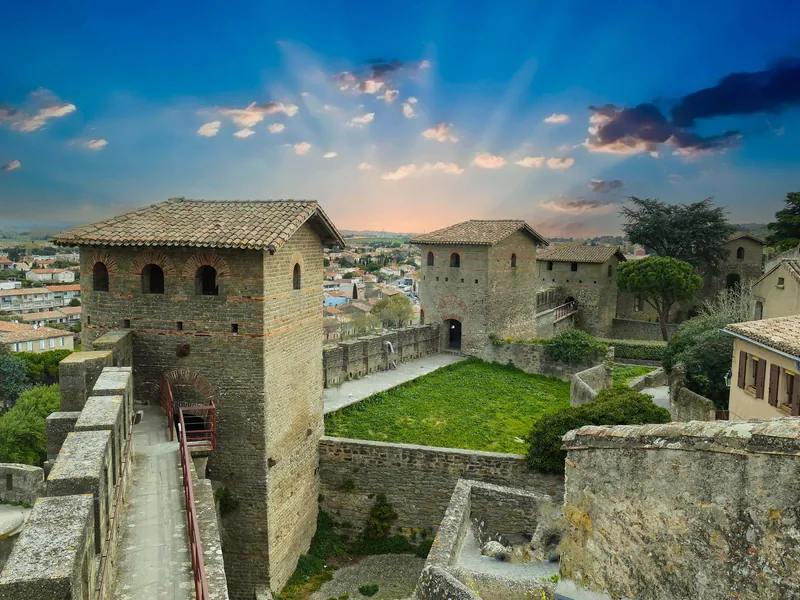
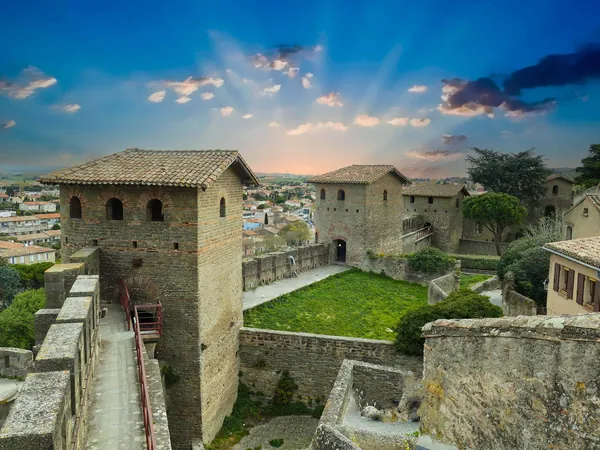
Long before the medieval towers, this hill was a fortified Gallo-Roman town. The inner ring of walls still holds Roman-era stonework, recognisable by its narrow courses and rounded towers. After Rome, the Visigoths held and strengthened the site — and, as local legend has it, hid a fabled treasure here. Roman below, medieval above: that layering is why the walls feel so deep in time.
The Cathars and the Siege of 1209
In the early 13th century Carcassonne was a seat of the Trencavel viscounts, swept up in the Albigensian Crusade against the Cathars. In 1209 the young viscount Raymond-Roger Trencavel defended the city — but with the wells failing and the town swollen with refugees, it fell in a fortnight. Carcassonne passed to the crusaders and then the French crown, ending local independence and beginning its life as a royal fortress.
The Royal Fortress of Saint Louis
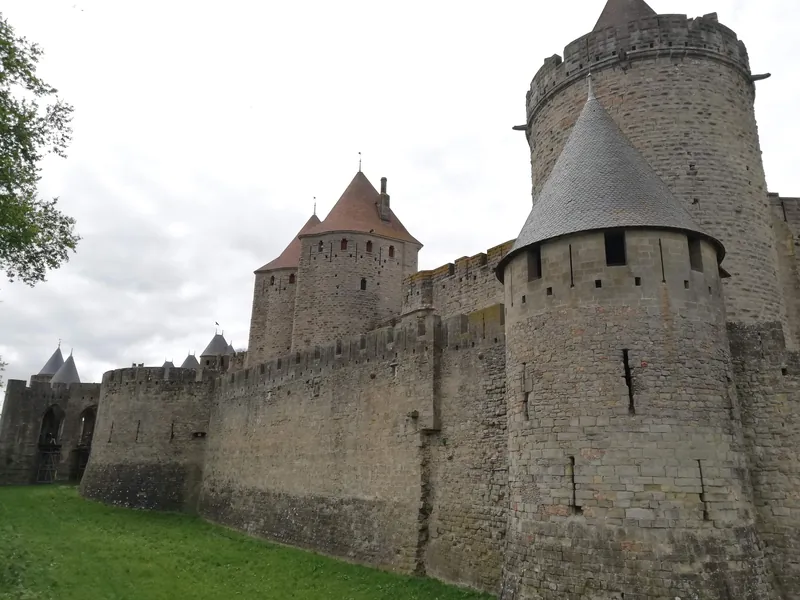
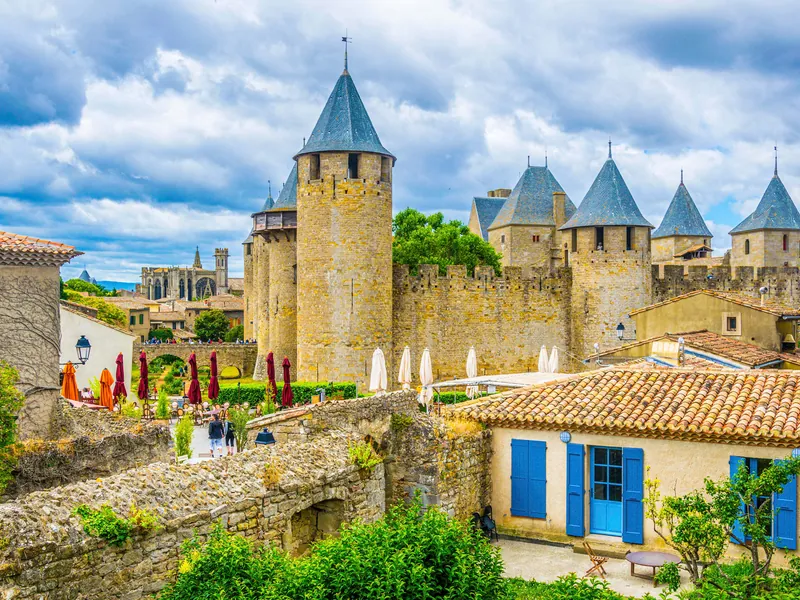
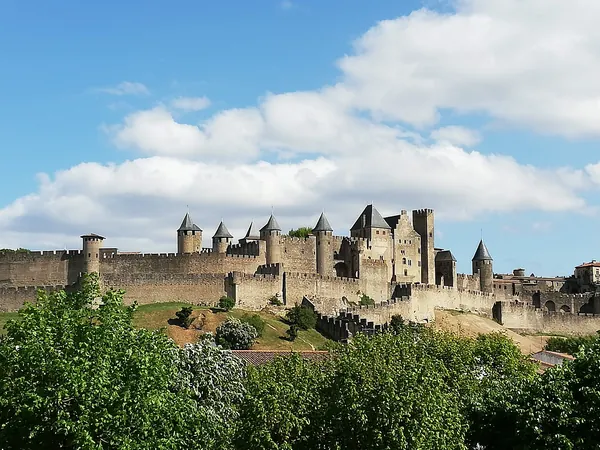
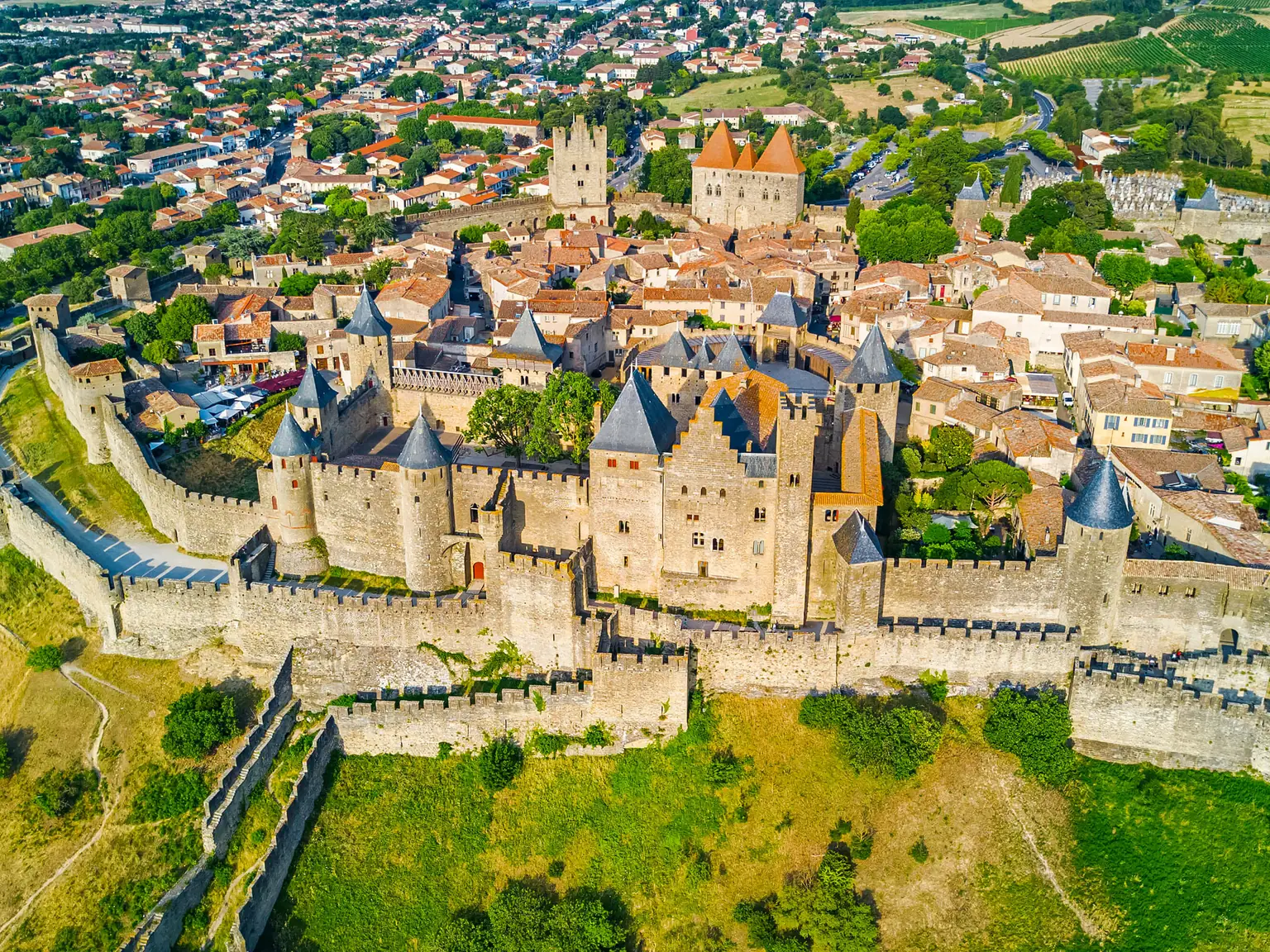
Under the French kings, and especially Louis IX (Saint Louis), Carcassonne was rebuilt as a cutting-edge border fortress. A second, outer ring of walls rose around the older one, creating the double defences that make the city so unmistakable today. A new lower town, the Bastide Saint-Louis, was laid out across the Aude. For four centuries the Cité guarded the frontier with the Crown of Aragon.
Decay, Demolition — and Viollet-le-Duc
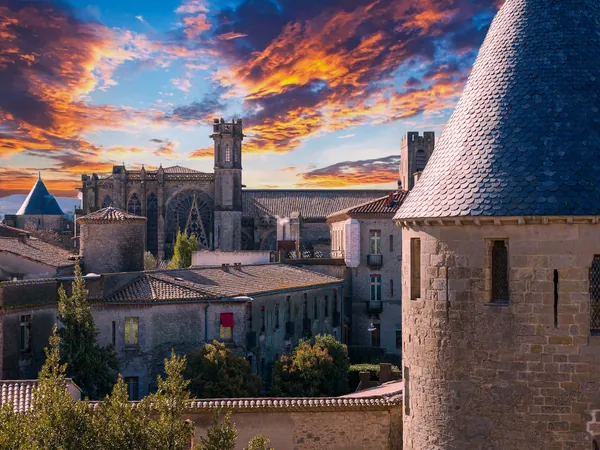
When the border with Spain moved south in 1659, Carcassonne lost its purpose and slid into ruin. By the 1800s the state proposed demolishing the walls. Locals fought to save it, and from 1853 the architect Eugène Viollet-le-Duc began a sweeping restoration. His pointed slate roofs — which critics say belong further north — gave the Cité the fairy-tale silhouette now recognised worldwide, and even helped inspire the world's best-selling medieval tile game.